Have $500? Invest in Elon’s AI Masterplan (From Brownstone Research)
Key Points
- Capital One is expanding aggressively, but integration risks and credit trends create uncertainty for near-term profitability.
- The Discover acquisition positions the company as a payments network competitor, potentially reshaping its long-term business model.
- Shares are down roughly 25% this year, reflecting investor caution despite strong revenue growth and projected upside.
- Special Report: Silver paying 20% dividend. Plus 68% share gains (From Investors Alley)
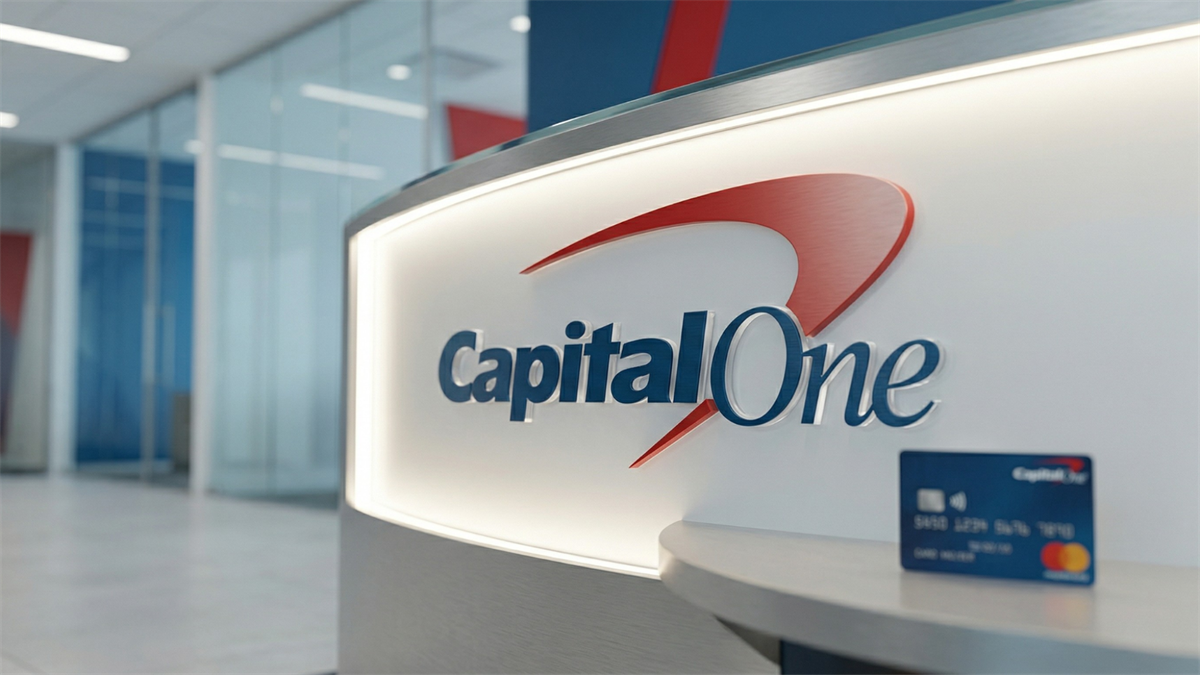
Capital One Financial (NYSE: COF) has a lot to prove this year. The lender and payments company reported higher-than-expected revenue at the end of last year and is digesting its $35 billion acquisition of Discover Financial. At the same time, its fourth-quarter earnings missed estimates, and it’s now absorbing another acquisition.
The question is whether the additional book of business, anticipated cost-savings, and potential efficiencies can reward shareholders with meaningfully better profits and a higher stock price.
The move Washington made in 1934 (Ad)
In 1934, a legal government maneuver transferred billions in wealth overnight. Most Americans never saw it coming — but those who did walked away wealthy.
Trump holds that same legal authority today. Advisors close to the administration believe he may use it.
If he does, the transfer moves fast. The window to position yourself on the right side is already closing.
A Transformational Year Driven by Acquisitions
With the purchase of Discover, which closed in May 2025, the deal transformed Capital One from one of America’s largest card lenders into an integrated payments powerhouse. Similar to Mastercard (NYSE: MA), Visa (NYSE: V), and American Express (NYSE: AXP), Capital One has control over the rails that move money between cardholders and merchants.
Together with last year’s earnings, Capital One also announced an agreement to buy Brex Inc. for $5.15 billion. Bringing on Brex, a fintech company aimed at startups and other businesses, added another layer of near-term risk.
Strong Financial Results Mask Integration Challenges
Last year’s results already showed some promise of a company absorbing a big deal while delivering results. In 2025’s fourth quarter, Capital One reported net income of roughly $2.1 billion and adjusted earnings per share of $3.86. Including results from its Discover purchase, net interest income was up 54% while revenue climbed 53% year over year. Net interest margin increased 123 basis points to 8.26%.
For the full year, adjusted earnings per share came in near $19.61, a relatively solid showing in the midst of a massive acquisition while also building loan-loss reserves. The bank set aside $20.7 billion for possible bad loans over the course of 2025, with the biggest jump coming in the second quarter. Pre-provision earnings for the full year rose 30% to $22.9 billion.
BREAKING: A C$26M Company Just Responded to the Pentagon's Call for Critical Minerals. (Ad)
One micro-cap subsea mining company just submitted a formal bid in response to a U.S. Defense Industrial Base Consortium solicitation to provide a reliable supply of Nickel to the United States. The DIBC, managed by Advanced Technology International on behalf of the DoW, issued this RPP in February 2026 targeting nickel, a critical mineral used in aircraft, missiles, semiconductors, and defense technologies—the Consortium provides non-dilutive financing for selected contractors, meaning potential government-backed capital without issuing new shares.
The urgency is not theoretical—China controls approximately 80% of global cobalt refining and 90% of rare earth processing and imposed defense-targeted export restrictions in December 2025. Management brings 25+ years of offshore experience from ConocoPhillips and BP, with roughly C$26 million market cap.
Stock Performance and Shareholder Returns in Focus
The share price has reflected this uncertainty. The stock is down roughly 25% this year after hitting a 52-week high of nearly $260 in early January. Given its current level, analysts rate Capital One as a Moderate Buy with 16 Buy recommendations and six Holds. The average price target is $275.95, an attractive upside of roughly 50% from current levels.
Although Capital One is not close to being a high-yield dividend stock, the company has not ignored income investors in the meantime. The company raised its quarterly dividend by one-third to 80 cents per share in late 2025, setting the yield in the mid-1% range at recent prices. That’s modest, but it’s in line with strong earnings and a willingness to return capital. The company’s board also approved a new $16 billion share repurchase program in October 2025.
Credit Risks and Competitive Pressures Build
Even with the size, scope, and efficiencies that could come from its latest purchases, the outlook is anything but assured. In the fourth quarter alone, Capital One’s provision for credit losses climbed to roughly $4 billion as card delinquencies and charge-offs moved higher. As the company’s book of business has historically skewed toward mass-market consumers, earnings could be further pressured if unemployment rises or inflation stays sticky.
Further, just because Capital One is now among the top payments players in the United States doesn’t mean competition has lessened. Digital-native lenders, fintech networks, and others in the financial services sector are pushing the boundaries of user experience and fees. The company will need to spend heavily on technology, marketing, and compliance in areas it hadn’t previously competed in. The investments could make it hard to turn revenue growth into bottom-line gains if the Discover integration proves costlier than planned.
Investors should keep in mind that, regardless of size and efficiency, the sector itself tends to invite more attention from banking regulators, antitrust authorities, and policymakers. Any movement around interchange fees, capital requirements, or consumer protection, however unlikely these days, could bring additional cost pressures.
Can Vertical Integration Deliver Long-Term Growth?
Yet, even with the Brex deal still pending, the Discover buyout is what makes Capital One both interesting and different from other large card issuers these days. By gaining the closed-loop payments network of Discover, Capital One controls both the lending side and the infrastructure that processes transactions.
Management has pointed to three main benefits: network fee revenue, the increased potential to cross-sell cards and deposits, and cost savings. Already, Discover’s student loans and home equity lines have been shuttered, and extensive layoffs have occurred.
Over time, this could shift Capital One effectively from a card-focused lender to a vertically integrated payments and banking franchise. If successful, Capital One is a company you’ll want to watch.
Recommended Stories
- Mastercard's Pivot: A Bullish Strategic Bet on AI and Data
- 'Get Out Now' – Wall Street Millionaire's New Warning (From Stansberry Research)
- Is NuScale's Plunge the Ultimate AI Contrarian Play?
- Government Seizure Incoming? Your Money at Risk (From Priority Gold)
- The Metals Company: Unlocking a Klondike-Quality Mineral Rush
- 3 Investments With Solid Yields Powering Through Market Weakness
- Is the Explosion of Single-Stock ETFs an Opportunity or a Danger?
Stay Ahead of the Market
The best investment opportunities don't wait. Get our research and stock ideas delivered straight to your smartphone—so you never miss a market-moving opportunity. Our text alerts ensure you see timely stock ideas and professional research reports instantly, whether you're in a meeting, commuting, or away from your desk.


